
by Peter Atkinson
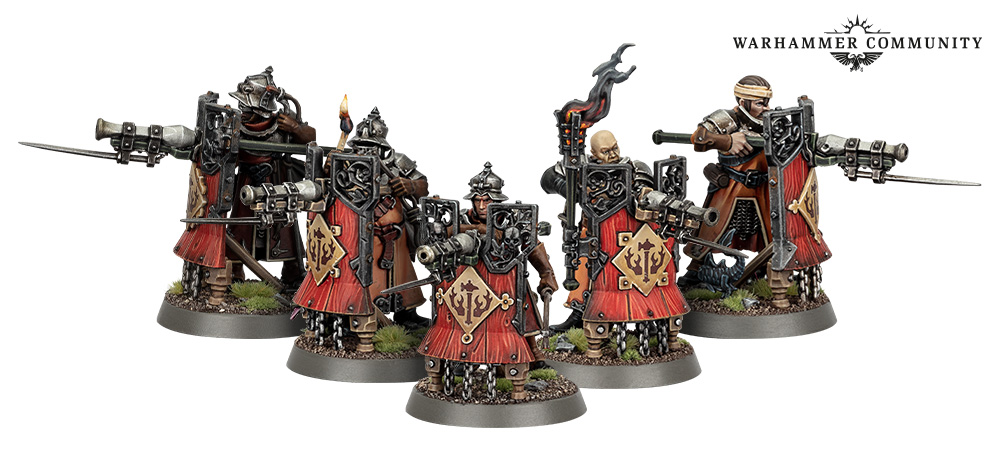
Dakka, Dakka, Dakka, Yawn. I can’t whinge too much about gunlines – I was more than happy to shoot mothefuckers off the table with Kunnin Rukk back in the day – but plenty of people hate playing against them, and I get why. Fusiliers (and their little chum) might have copped a pre-nerf but you can still run 30 or 40 if you want to – and plenty will – so now’s a great time to focus on how to run the bastards down.
Hard and Soft Counters
It’s Fusiliers today but when they eventually fall out of relevance, it’ll be something else. Over the years (and amongst many others) we’ve seen Sentinels and Bow Snakes, plus KO on repeated occasions, break the meta wide open and win loads of big events. So for that reason we won’t be going down the rabbit hole of just list-tailoring against Fusiliers specifically – our approach will aim to stand up against the next shooting army and the one after that, rather than getting hung up on the rules for this build in particular.
There’s a whole bunch of approaches you can take, and we’ll try to cover off a few different angles today. “Just shoot the heroes” was always a bullshit argument because most armies in this game simply don’t have the tools to do that, and never have. So it’s effectively telling people to leave their favourite armies on the shelf, and if that’s the best way to handle the meta, well… I think we can do better.
So what we’ll be doing today is covering a few different angles on how to tackle a shooting meta when it cycles around:
- Listbuilding tips
- In-game tactics
- Universal options
- Anti-shooting factions
- Anti-shooting units
We’ll be covering that last one as broadly as possible, and what that means is we’ll take specific examples of rules and tech that exist in this game and use them to (A) illustrate the principle and (B) add nuance that you could miss on the first reading. The idea being to give you a heads-up on the kinds of rules to look out for on existing and future warscrolls.
What this article won’t be
We’re not going to list every warscroll in the game that has potential to be good against shooting armies. It’s boring, nobody would read it to the end, and most importantly units change over time. If you spot something important that we’ve not mentioned, by all means raise it in the comments to help out your fellow gamers, but the scope of what we’re doing here today is really to deliver some tools to deal with shooting if you don’t happen to own a whole bunch of Idoneth.
What makes shooting powerful?
There’s two ways you can get there: the easy way or the hard way. If you want to remove your opponent’s key pieces without the hassle of going through their screens first, and running the risk of your best units potentially getting whalloped instead if Prio goes the wrong way, with shooting you can just point at whatever you like and tell them to remove it.
It also plays an important role in getting stuff out of combat that doesn’t want to be there: in a combined-arms list you’ll often want to shoot a unit out of combat so it can go off and charge a more important target for example. That’s really the reason people bring reach in their lists: they’re flogs to have complete agency over where their output is applied, and thereby remove key pieces at will. So a lot of things we’ll be doing are aimed at reducing or removing that agency and dictating terms over whether and how their units can shoot.
Just something to keep in mind. So we’ll start off today as broad as possible, dealing with game-wide rules and principles, and get more specific as we drill down.
And in terms of how shooting units express that power, there’s a sliding scale with pure fishing-for-mortals at one end and stats-based shooting armies at the other (blasting through consistent damage with good hit, wound and rend characteristics). Sentinels would be a good example of the former, KO and Slaanesh gunlines the latter, with Bow Snakes and now Fusiliers combining elements of both. We’ll touch back on this as we discuss which anti-shooting tech is useful against which style of shooting, to help you understand what will be useful in a given matchup and metagame.
Ready? Let’s go.
Consider the Palisade
Let’s start off with a free hit – this one is available to every army in the game bar Khorne, and the quality of life tweaks it’s had should put it back into contention. The knock on Palisades when it first dropped was that the unit had to be in range at the time it did the shooting – so they could literally just walk away from it and let loose. The window was tweaked so that it pops in the hero phase, and it’s now very much fit for purpose, even if everyone has kind of forgotten about it.

Effectively 24” range (and no restrictions around moving or teleporting first) should put this bang into contention. When you initially cast it in your hero phase, your opponent won’t typically do a lot of shooting in your turn, but it does still help in certain cases:
- It completely switches off Unleash Hell.
- Likewise The Last Word, another way for KO vessels to shoot you after you charge. Nope.
- Fusiliers can famously counter shoot on your turn with the relevant Order. But not today.
Beyond that, people do fail dispels (and CV 7+ is not a slam dunk), so for 40 points it could be worth a punt.
Core Rules
When 3rd Edition dropped I could have told GW that Lookout Sir wasn’t fit for purpose, because so much of the hero sniping came from MWs on 6s (or 5s, or 5s with full rerolls, because we all know how that goes). So all too often there were zero fucks given about that neg 1 to hit.
Luckily, they did get the memo eventually and hero sniping is now severely curtailed in this game:
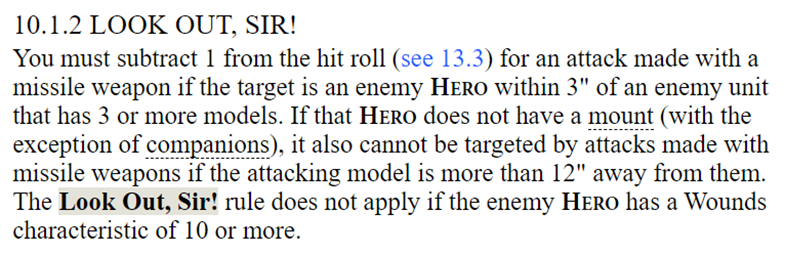
That second sentence was a very welcome addition. Credit: GW
I’m sure you’re all well aware of the rule by now, so the only thing to really add is how you can control that 12” bubble to a certain extent. Teleport and Bang is the pinnacle of zero-skill shooting, which usually means they’ll pop up 9” away from you, so your heroes need to be only 3”+ back from your frontlines to be out of range:

If they’re getting there via linear movement, they could walk up to 3” from your screening unit, so you’d need to measure 9.1” back from the front to stay 12.1” back in total. You just really need to understand how quick their shooting units are, because most of them won’t zoom across the board quickly enough to stand 3″ from your frontline, and would rely on a teleport or the long weapon range to “get there”; Idoneth Sharks (especially on the Flood Tide turn) are a notable exception. So it’s your job to know what your opponent’s units can do, and how you can manage the 12” zone effectively.

Combine this with a 14” base move and OUCH. Credit: GW
Finally in this space: credit to legendary Citizen Nigel Weir for flagging up that GW’s relentless nerfing of poor old Order continues, with the removal of Freeguild Handgunners and their ability to bypass this rule in its entirety. Cop that, ya bastards.
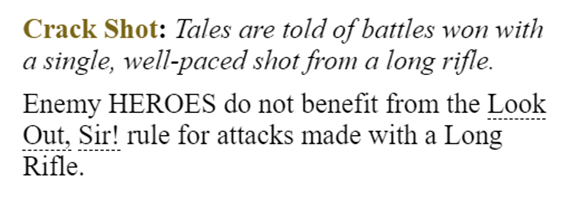
Freeguild Handgunners.

If you can’t beat them…
You could always respond to a shooting meta by going out and buying a shooting army, but most people don’t just want to be an NPC, so we won’t dwell on this. It’s there if you want it.
In-game: Tagging
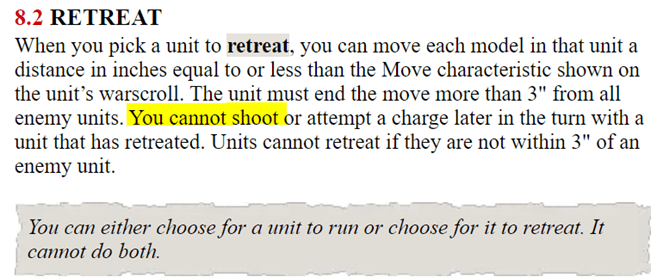
Moving on to techniques that most or all armies can leverage in-game, it’s crucially important to tag as many shooting units as possible within 3” on your turn, to lock up their target priority for the next shooting phase. This is even more important going into Prio: if you lose they have to spend their turn shooting off something crap, and if you win the roll you might be in a position to give it away safely.
They can either shoot off something disposable and waste their output; or they can retreat and waste their output. Either way, you’re grinning.
Credit: GW
The absolute pinnacle is tagging multiple units with a proper bullet sponge that can soak up the output from the lot of them, but even if just one or two units can shoot off your Boarboy Maniaks before the rest unload at will, it’ll soak up a bit of mental energy as your opponent figures out their sequencing; it’ll cost them the whole movement phase where they could have been getting down the board and onto objectives (or within 12” of your heroes); and occasionally they’ll roll unders and have to allocate another unit to the job.
A couple of extra-nice ways to achieve this include:
- 6” pile ins (units like Yhetees and Gitmob wolves)
- Rare, specific instances of being able to walk in and out of combat. The big one I’m thinking of here is the Dankhold Trogboss’s Heroic Action that can upend the complexion of a game in either player’s hero phase
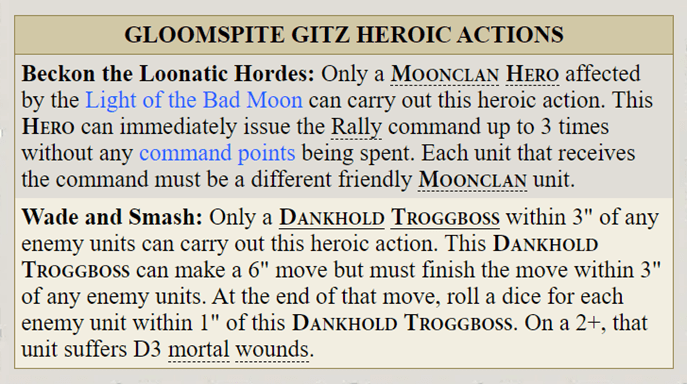
Brilliantly, Trugg himself has the keywords to Wade and Smash as long as you run classic Gits and not his AOR. Credit: GW
But even without access to those special rules, just tag the shit out of everything all the time. It’s cash money.
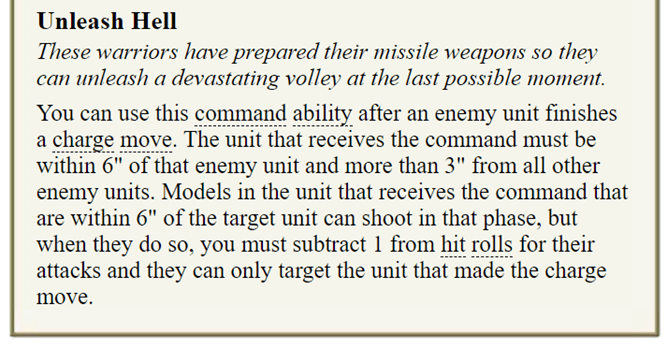
In-game: Soak Up Unleash Hell
Long before Fusiliers came along, at the start of 3rd GW thought it was a great idea to let shooting units blast you off the board on your own turn because that would improve interactivity in the game.
Credit: GW
Since then, Unleash Hell has thankfully been nerfed (to an extent) and now it’s just a fact of life. There’s broadly two paths you can go down here: cheap trash, or a bullet sponge.
- Cheap Trash: Throw the cheapiest, trashiest unit under the bus and let them die. Then charge in with a second unit that actually matters. Bonus Points if they are fast. Bonus Bonus Points if they can fly, so they can hop screens and get where they need to bring key units within 3”.
- Bullet Sponge: You’ll take a bunch of damage but you’re so meaty you don’t care. A big block of Grots might fall into this category but something like a Mega-Gargant, that can soak up an overwatch with only a very minor drop in output, can also go charging in there under most circumstances.
Either way, it’s better than losing an expensive hammer unit to Unleash Hell and getting absolutely nothing to show for it. In both cases you just need to remember to sequence your charges correctly: send in your dedicated Overwatch-soaker-upper first. Then your opponent has to choose between wasting it on them now (and then it’s gone for the turn), or not using it at all (since they’re now already within 3” of your models). This is how you can dictate terms and minimise the bleeding.
Listbuilding: Low Drops
At risk of revealing the true nature of my unparalleled genius: if you go second, you can’t be doubled.
It’s within the reach of almost every army to go one-drop if you really wanted to, so that’s up to you to decide how much you value it. If you are feelsbad-averse and really don’t want to get banged off across a double turn, you almost certainly own an army that can avoid that most of the time by going one-drop and putting your opponent in first. Granted you will sometimes come up against a one-drop Fusiliers list, and then you’re in coin flip territory, but it’s within your grasp to bring something that at least has a strong chance of controlling Prio.
Listbuilding: Wound Density
Another soft counter, but really open to only a subset of armies, is to soak up the firepower through sheer volume of stuff. The most powerful shooting armies are often not true DPS beasts – they are more about high quality damage delivered exactly where you want.
Sentinels and Bow Snakes for example will get insane value out of banging 20-odd mortal wounds into a Maw Krusha or even Kragnos, and lifting an easy 500+ points out of your army. Killing 20 of my 200+ Moonclan Grots on the other hand – that will go a lot less far in securing you the win.
So leave the fun stuff at home, flood the table with 6+ save idiots and share around the misery that GW regularly imposes on this game with OP shooting. Having a proper DPS test army in your portfolio is a great long-term investment of your hobby time.
Enhanced Rally
An important subset of the DPS-test path is taking advantage of Enhanced Rally rules. You either have access to those rules or you don’t, but if you do, you can certainly lean into them in times of heavy shooting. In Gloomspite for example, you can make sure you’ve got 3x decent-sized units within range of a hero who’s under the Moon. That’s something you can build into your lists at Listbuilding stage.
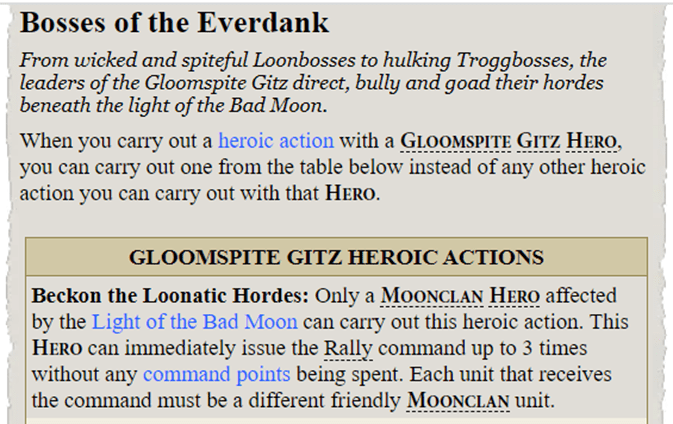
Note that only the Hero needs to be affected by the Bad Moon, and not the units being Rallied. Credit: GW
Rally’s a great tool against shooting – it only works when you’re not in combat, so if someone is trying to ping you off from across the board, that’s ideal. Bring back half of what they just removed and blow up the value equation. It’s been limited to 10 wounds each time, but that’s still pretty good considering it’s in both players’ turns and Prio-proof. In the (admittedly extreme) case of Gloomspite, that’s theoretically 270 Grots you could put back on the table over the course of a game. Not getting much value out of their shooting at that point, are they?
So to get the most out of enhanced Rally:
- Craft your list around the units and heroes that unlock the enhanced rules
- Reinforce your units with Rally opportunities in mind (e.g. 40 or 60 Grots is unlikely to go down to anything but the most sustained fire, so you should have plenty of opportunities to bring back models)
- Look for the opportunity to issue CAs for free (or to gain bonus CPs) so you have the opportunity to have a punt on Rally in every Hero Phase (both players’ turns), and enjoy the upside without worrying about squandering scarce resources
- Remove casualties to get out of combat and facilitate Rally in the following Hero phase
Deploying off the board
We’re starting to get increasingly niche here, but this is great tech if you have it. BOC are the apogee of target denial: start everything off the board and whatcha gonna do? You’ve got nothing to shoot at. Then the Bullgors pounce and apply infinite damage, anywhere on the table.
Stormcast can do this to a large extent too (starting chaff on the table and keeping the good stuff in reserve), with the Annihilator build designed for precisely this purpose, and if you’ve got balls like King Kong the Spiderfang subfaction in Gloomspite means the rest of your army can join the Skitterstrands lurking in Shyish.
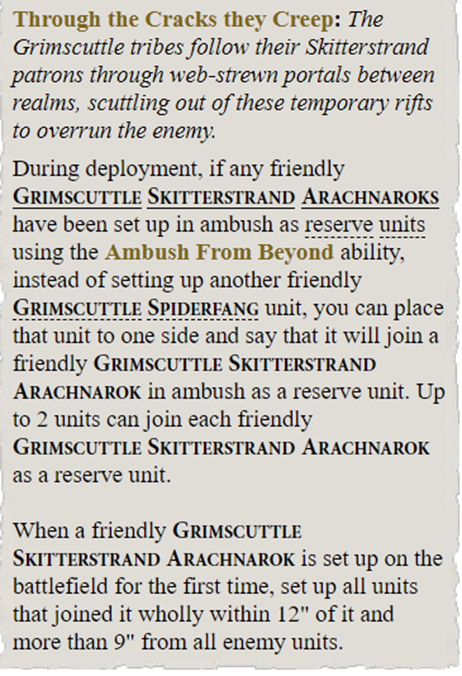
Grimscuttle subfaction – Charge Bonuses Not Included. Credit: GW
When they come on the board they don’t have the 5+ charge out of deepstrike that makes Bullgors so strong, and even if they do hit a lucky charge they don’t have the damage when they get there; and then GW wonders why nobody plays Spiders. So if you want to do this competitively, BOC (or maybe Annies) are probably the way to go.
Violence. Speed. Momentum.
There are a handful of armies that are fast enough to start on the backboard, out of shooting range, and still run down that castle in a turn. That can be linear speed or deep striking with charge bonuses – the one that I’ve had some success with is Ironjawz. Seraphon’s ranged barrage is a blend of magic and missile weapons, but even at their meta-terrorising peak I was able to run them down a lot of the time. This was at a time when Seraphon were winning every event, and Ironjawz emphatically were not:

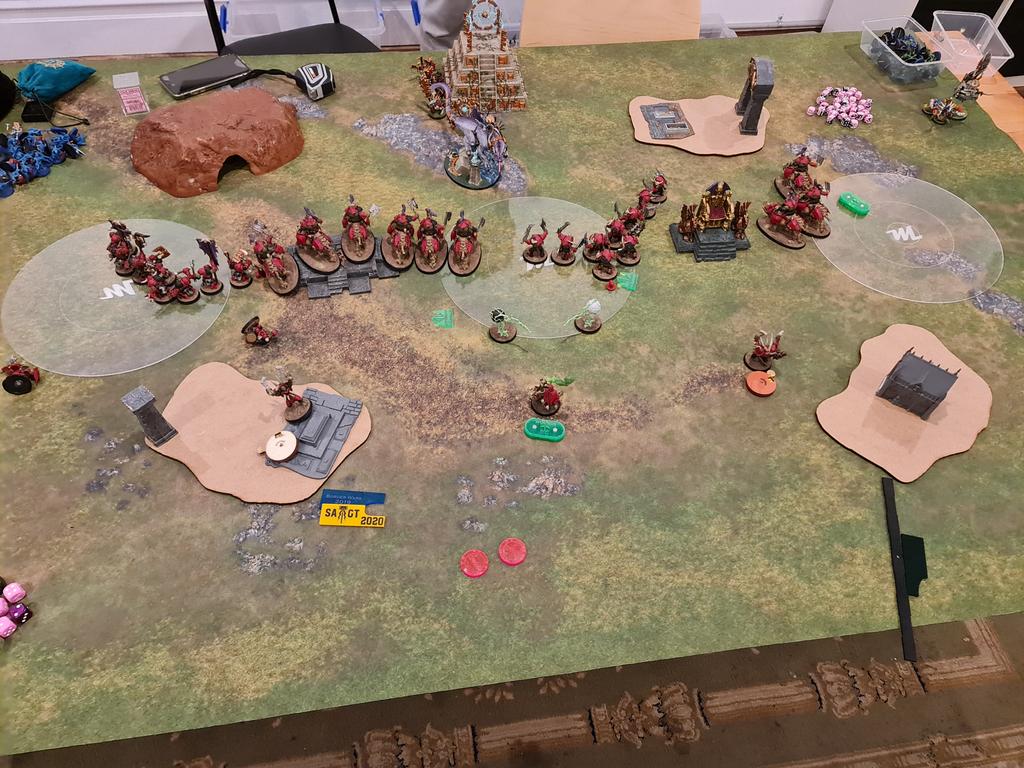
You really need to do your homework here though, and know your opponent’s threat range. As long as you can move farther than they can shoot, you’re golden.
Specific Faction Rules
We’re getting into Just Shoot the Heroes territory here: either you have anti-shooting faction rules, or you don’t. But we’re not covering the topic if we don’t discuss IDK and Grinnin’ Blades. Winterbite from Ogors is a bit more conditional and a bit less good.
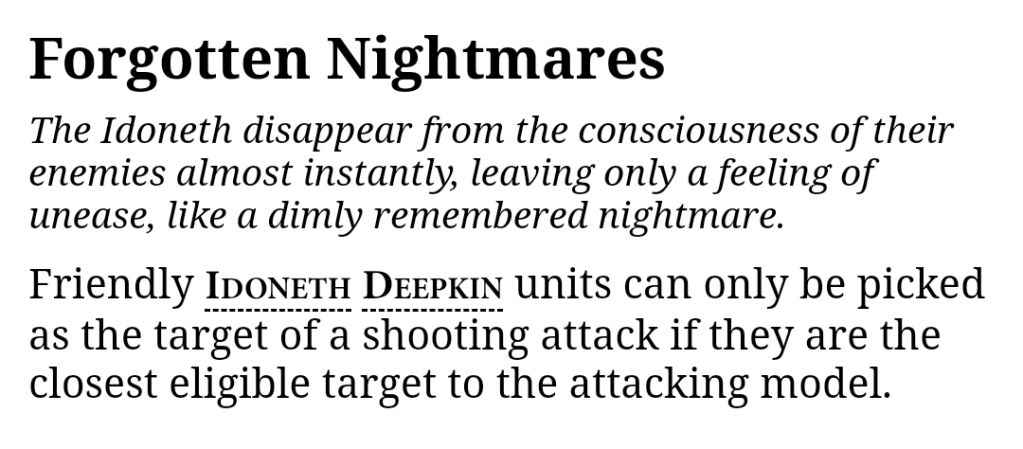
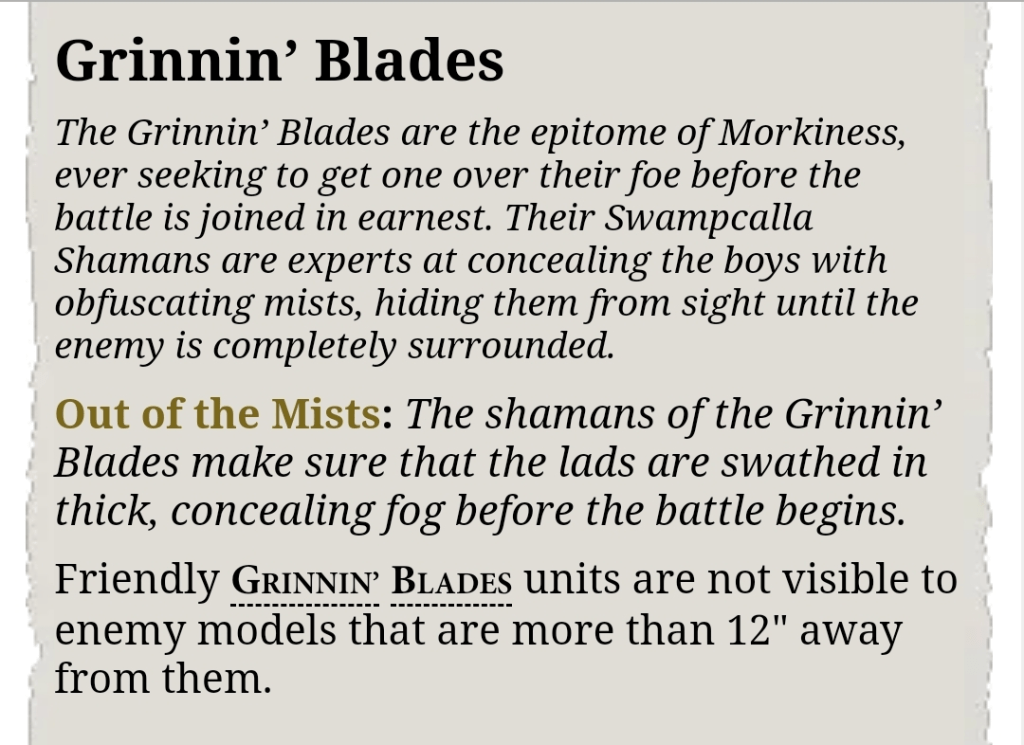
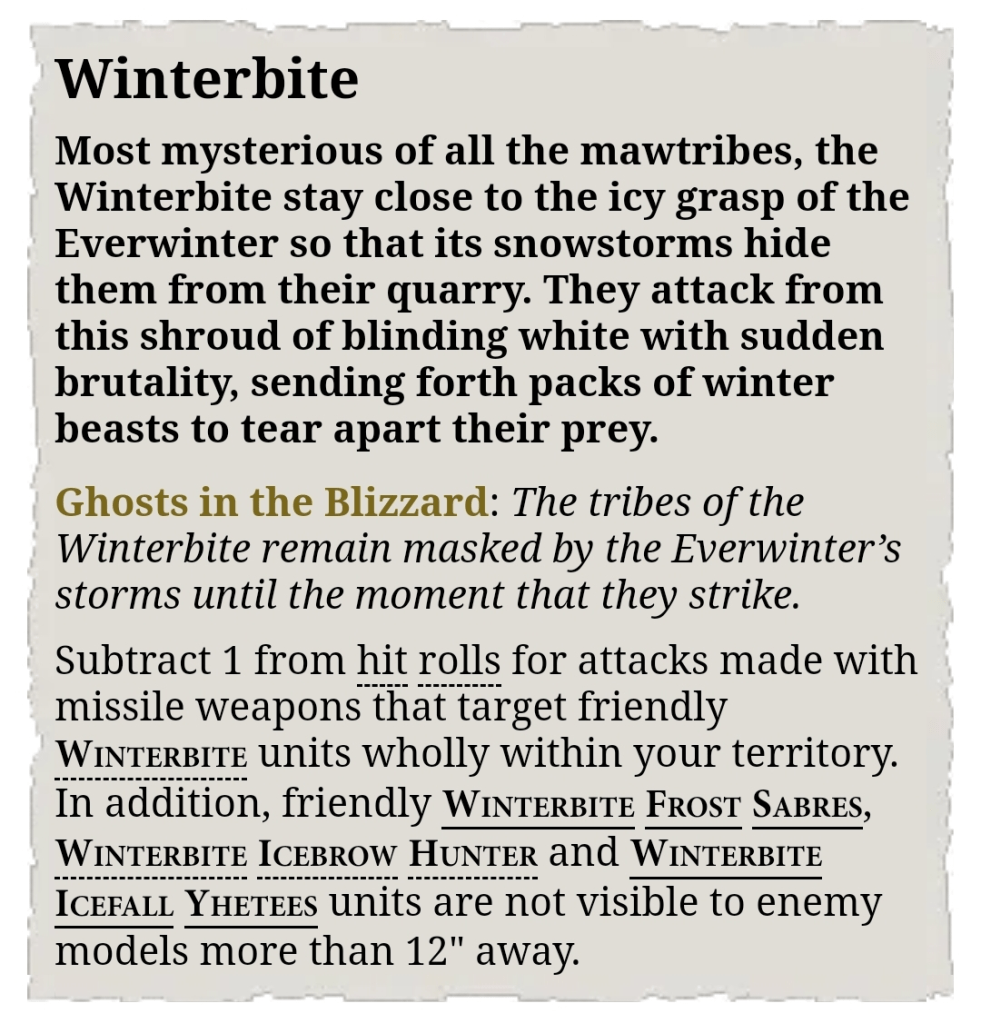
Which one wins the head to head? Probably IDK with their extreme speed allowing Allopexes to zip up inside 12” to pick their own targets. With High Tide being so similar to the Kruleboyz Waaagh, that speed is probably the main edge between the two, but it’s close enough that player skill will likely be the main determining factor. Probably the more important question is which one has the better tech vs shooting, and all I would say there is that I’d be pretty confident of doing consistently well with either of these armies in a shooting meta. We wrote up a competitive Grinnin’ Blades list on the Patreon last week, so check that out if you’re a member – I reckon it would go OK.
And here’s some unsolicited advice for the dev team: you obviously won’t want to create a bunch of anti-shooting armies, but a couple more anti-shooting subfactions might not go amiss. It gives people a way to pivot to the meta while still using and enjoying their collections, and as long as you don’t go too crazy with it, there’s probably room for one or two more to follow the Grinnin’ Blades (or Grimscuttle) models.
Specific Unit Rules: Debuffs
And to close out the discussion, here’s a few things specific units to keep in mind. Great if your army has them, not so much if it doesn’t. Still worth a mention though, and hopefully we can add a little bit of value by discussing the nuance around some specific tech.
First up, you have the very explicity anti-shooting rules like Mournfang with their Overwatch switchey-offery. These kind of anti-stats abilities work best against armies like KO whose whole schtick is just pounding out the conventional damage; it won’t do much to stop Sentinels if they rear their ugly heads again, and even Kruleboyz will feel happy unleashing hell into them from behind a screen.
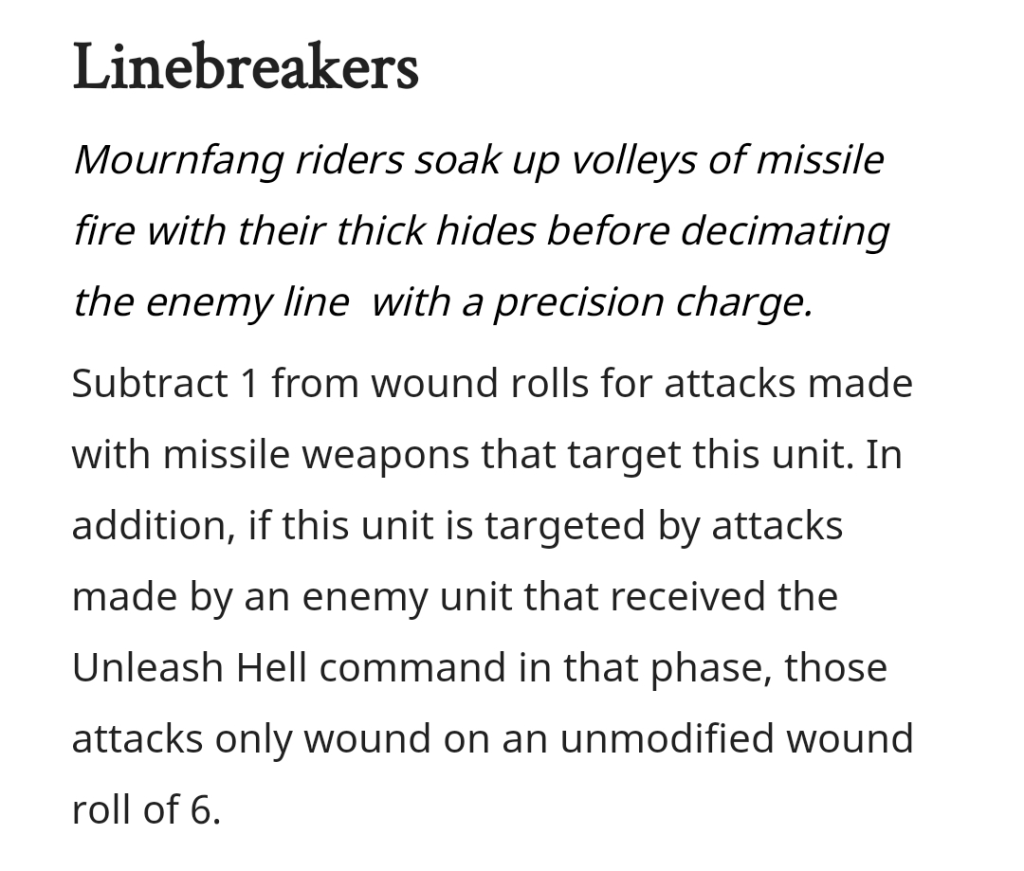
A little bit of nuance to be aware of here is that KO’s The Last Word comes after the window for Unleash Hell, so if they try to double-tap you, they’ll still be wounding on 6s with the latter too:

If they’re really smart, they might just skip Unleash Hell and be better off only using The Last Word; but if they’ve already rolled out the dice for a full shooting attack they can get fucked. And even making them skip using Unleash Hell has to go down as a pretty big win. These guys do also work quite nicely in the Winterbite subfaction mentioned above, with both -1 to hit and -1 to wound really slowing down a lot of shooting output, as long as you’re in your own territory.
Speaking of which, general -1 to hit (or wound) bubbles are great against shooting too, even if they’re not explicit anti-shooting tech as such. Our guy Pat Nevan won a GT with Ironblasters when they were a thing, and his key tech was including a Firebelly (with Billowing Ash) for the mirror match.
These -1 to hit bubbles are not all created equal. For anti-shooting purposes, the one you really want access to is a passive bubble affecting your own units, so they’re functional even when your opponent is banging away from a safe distance:
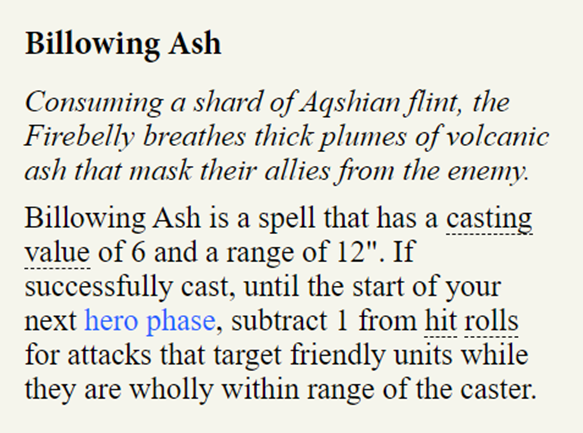
Protects your whole castle, regardless of where the enemy unit is located. Credit: GW
The Gobbapalooza has the exact same spell on their warscroll:
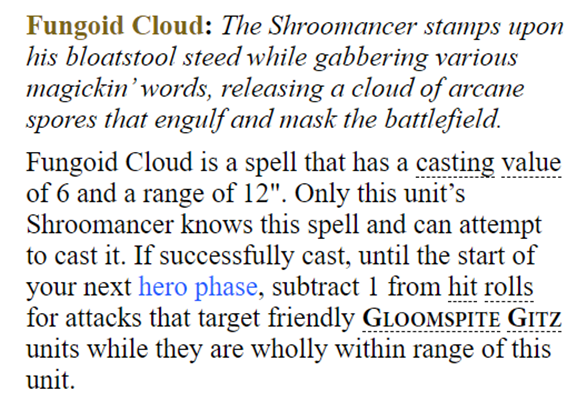
The Madcap Shaman also has their own version of this, which can pick your own unit (yay!) and they can move off up the board taking the debuff with them (yay!), but it does not affect all units wholly within range (boo!) and only applies to shooting and not to melee (boo!). And it’s Gloomspite units only too (boo!), so thanks to a couple of people who pointed out that keyword restriction:
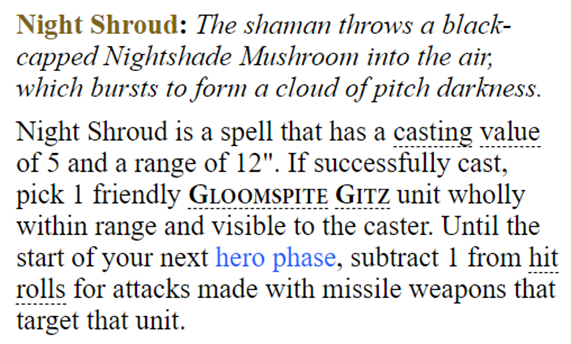
At least it’s on his Warscroll, so he can use it as an Ally. Credit: GW
A Madcap taken to provide a cheap Acolyte could slap this on a Mangler before he heads off to war (and even pop Mystic Shield on him too with his once-per-game double cast), but generally I prefer the two above.
The Spiderfang version by comparison relies on the enemy unit being in range, which shooting units often won’t be. So while it’s still a good spell, against shooting specifically that’s a big limitation for what we’re looking for today:
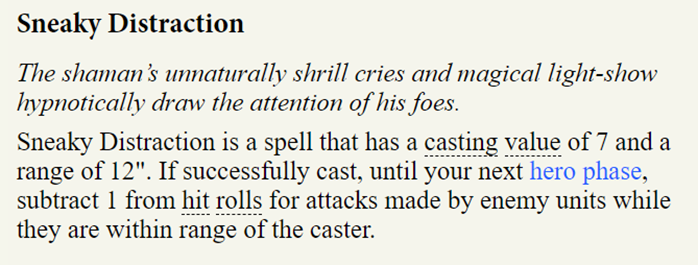
Credit: GW
Specific Unit Rules: LOS blocking
Even better than debuffing your opponent’s shots is not letting them shoot you at all. My favourite application of this would be the Bloodpelt Hunter, because he can moonwalk into terrain to get cover:

This fella’s playing his own little game. Credit: GW
The Fungoid basically gets Lookout Sir. It’s slightly better because he doesn’t need his mates nearby, and it also protects him from magic, but really it’s pretty apparent that it was written before Lookout Sir got upgraded. So it’s definitely nice to have, but not the wow factor it was probably intended to be:
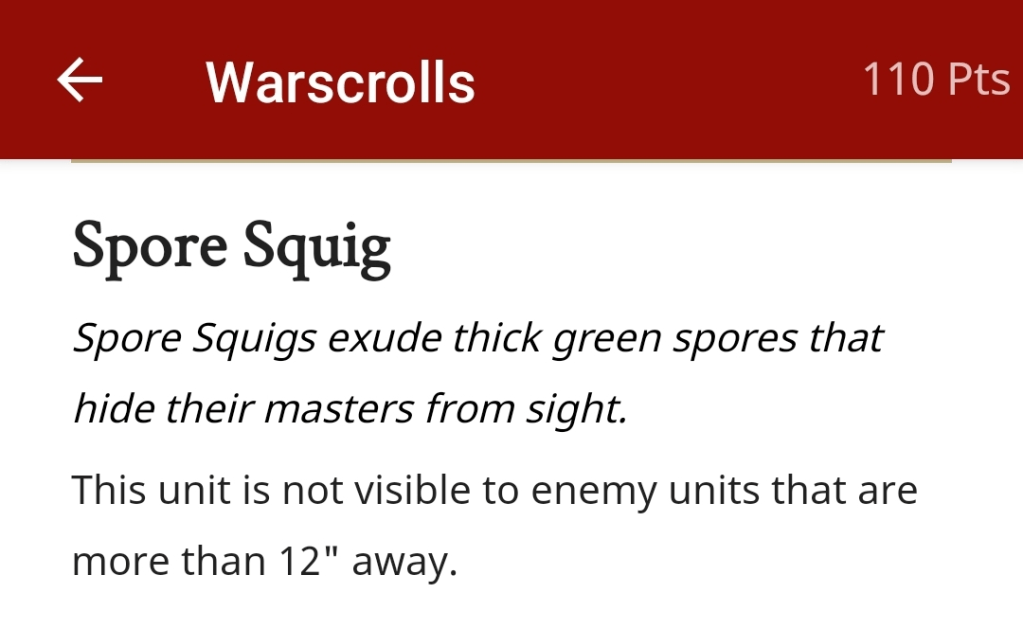
Also within Gloomspite, Sporesplatta Fanatics block line of site under certain circumstances:
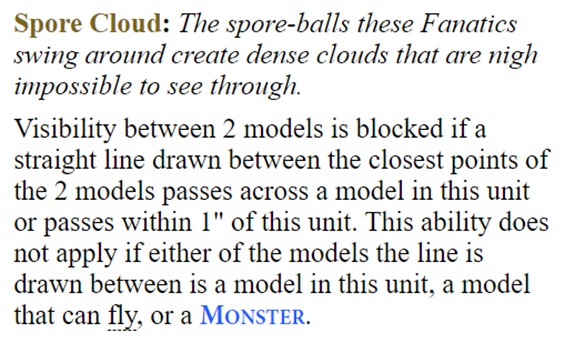
The issue we have here is not just the fly / Monster limitations built in – it’s the way that shooting works. A screen in shooting is a fundamentally flawed concept because of how shooting operates sequentially.
A screen in combat will protect you from everything for an entire turn. Your opponent can crash unit after unit into that screen, and unless they have huge numbers of charge mortals (which is very much an edge case), they’ll all just have to pound away and overkill that one unit (as long as you leave a suitable gap between that and your important units).
A screen in shooting on the other hand evaporates as soon as the first volley rips into them, and then the rest of their output can be targeted as normal. It’s not like in the charge phase, where they (usually) stick around until the end of that phase: in shooting, you remove casualties straight away and they’re gone.
It’ll still help you when your opponent only has one big shooting deathstar unit, and maybe keep an eye out in future for similar tech on a unit that doesn’t have just 5 x 1 wounds on a 6+ save; but for now, it’s just a nice-to-have ability on a unit that has a few different cool things going on.
Know Your Enemy
I’m going finish off by breaking the bad news that you’ll still need to do your homework. If there’s a specific list that is terrorizing the meta, and you don’t want to get smashed by it, it’s up to you to make sure you’re across the detail of that army.
The prime example was the old Kunnin Rukk, which needed to keep the SBB alive, otherwise the whole thing collapsed. But I would like to think the rules writing for this game has got a bit more sophisticated since those days.
Just to throw out a couple of more modern examples: KO hates having Command Abilities switched off, so Geminids is dope against them. And with Fusiliers, it pays to be aware that they get to shoot you back before they remove their own models (check out Nico’s comment beneath this article). So there’s usually a wrinkle or two in there.
We do sometimes write up “How to Beat” articles on the blog, and if Fusiliers specifically have that kind of impact we’ll circle back to them. But today’s article had a more ambitious scope than that, and I hope there’s been value in it for some of you. Good luck.
Credit for cover image to Games Workshop

If you’d like to help us continue our work, we’d love to have your support. All Patreon Tiers include Discord access, exclusive articles and regular contests. Our Tiers are priced to be within everyone’s reach, so please click here to join us today!


 Plastic Craic
I don’t think you can cast the MadCap’s Night Shroud on a Maw Crusha as the spell requires the target be a Gloomspite Gitz unit.
LikeLike
You are correct, thanks for pointing that out! I’ve updated that one 🤟
LikeLiked by 1 person