
by Calvin Rarie, with additional writing by Peter Atkinson
The full rulebook is out in the wild! Men have Read Books, other men and women have Taken Photos of Books, and yet further men and women have Collated Books Into PDFs. These in turn spread like wildfire throughout the world’s group chats, discords and WhatsApps in what was the weekend’s second-biggest viral surge. So as hectic as it was, instead of contributing to society’s landslide of superfluous Hawk Tuah memes, we spent our weekend going deep into the new rules to figure out the changes we’ll all need to know about.
We’re not here to regurgitate the whole rulebook back at you – the goal today is to keep a laser focus on selected changes and interactions that you might miss on your initial skim through, and which will have a big impact on your transition into 4th Ed.
Ready? Let’s go.
Faction Terrain Only Has Combat Ranges in the Charge and Combat Phase
In case you aren’t aware, you can now fist fight faction terrain to death, which is great if you really hate spooky ghost boats, holes in the ground that rats pop out from, or whatever the fuck is going on with Slaanesh’s thing. However, it’s important to know WHEN you’re actually in combat with a Charnel Throne, for example.
In the movement phase, Faction Terrain does not have a combat range, meaning you can walk right up to it, no problem. But what happens when you move to the charge phase?
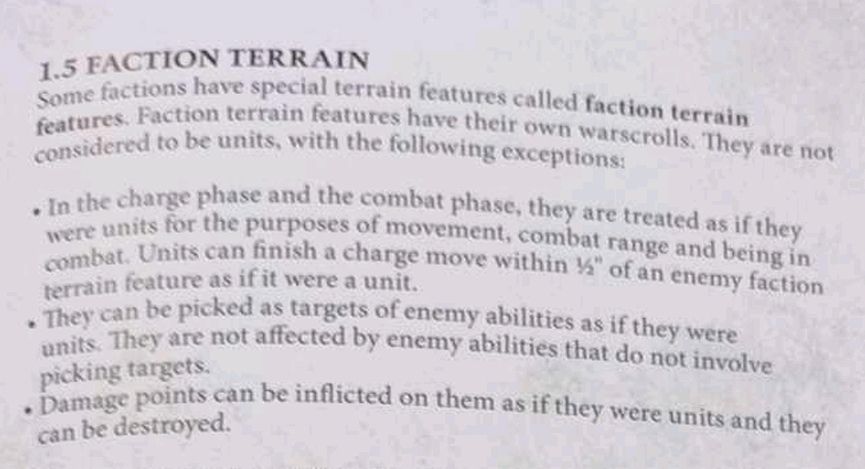
Well, now you’re in combat with it! Which means that if you’ve walked right up to that Charnel Throne, there will be no charging on your turn with whatever unit is in combat with it, and on your opponent’s turn that means no counter-charging either. You can still charge it like normal if you’re outside of 3″, which opens up some creative maneuvering for extending or guaranteeing charges to jump onto an objective, or to swing around the Charnel Throne and beat some Ghouls to death. The same is true if you “walked” into combat with the Throne and pile-in around it to do the aforementioned murdering.
Oh, and one last note–the Core Rules defines “in combat” as “units from opposing armies that are within each other’s combat ranges are visible to each other.”
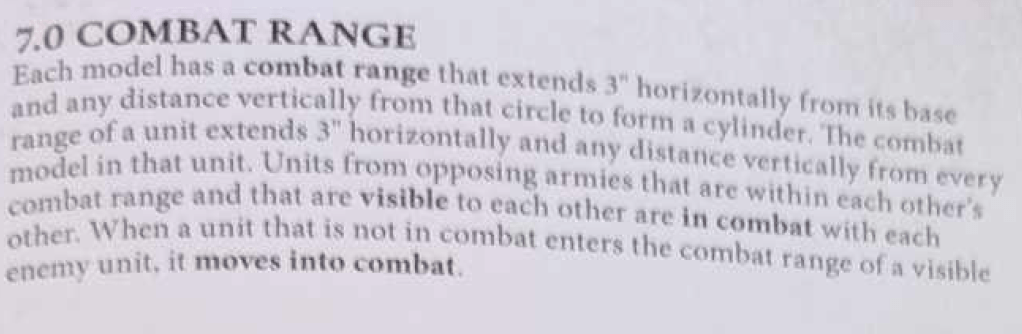
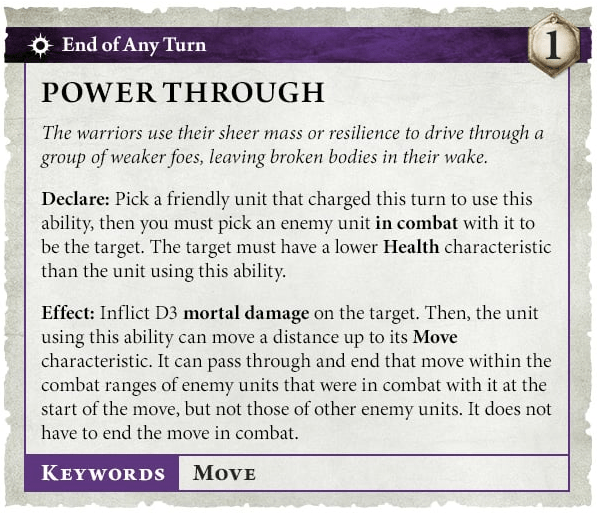
Why is this important? Well, let’s say you charge a Charnel Throne with a Gatebreaker Mega-Gargant and fail to destroy it on your turn, and that Gatebreaker is not in combat with anything else. At the end of the turn, you’re no longer in combat because the Charnel Throne only has a combat range in the Charge and Combat phases. So if you charged the Throne and fail to kill it, you won’t be able to use Power Through at the end of that turn if you’re not in combat with anything else, because the command requires you to pick an enemy unit that it is in combat with.
The Attacker/Defender Roll and Who Gets Turn 1 Is Different Now
This is what the Attacker/Defender roll did at the start of a game in 3rd edition:
- Both players rolled off, and the winner chose to either be the Attacker or Defender.
- The Attacker picked which territory they wanted AND dropped first.
- Defender set up the terrain and assigned Mysterious Terrain (RIP).
- Faction Terrain placement was decided on another dice roll.
Now–even though it’s not technically called that anymore, but for simplicity we’ll keep it that way here–the Attacker/Defender roll does this:
- Both players roll off and the winner picks which territory they want.
- NO CHOICE.
- The loser of the roll decides who drops first.
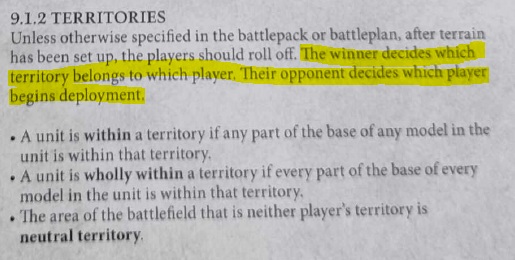
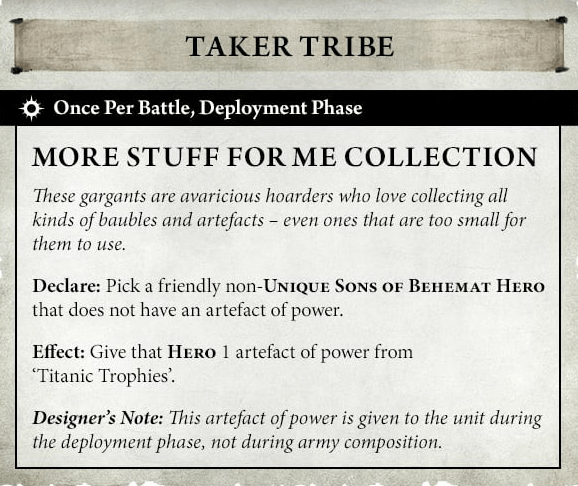
This is an ENORMOUS change because now the person who loses that roll decides who drops first, which dictates who places Faction Terrain first, who drops units first using DEPLOY abilities, AND who applies other (non-DEPLOY or DEPLOY TERRAIN) Deployment Phase abilities first during each respective stage of that Phase. An example of the last one is the new Taker Tribe Formation ability, letting you pick an extra artefact to give to a Hero who does not have one already.
Meaning if I’m that Sons players, and I “lose” the Attacker/Defender roll off, I can purposefully make my opponent deploy first, get perfect information off of their deployment phase, and then select my preferred Artefact with the Taker Tribe.
Edit: Thanks to Laurie H-W for pointing out that once you’ve both finished deploying, the person who finished setting up first still chooses which player has first turn in the first battleround, just like it is currently in 3rd Ed (section 12.0 in the new rules). So that part hasn’t changed.
Additional Note on the Deployment Phase: You Can Split Up Battalions
In deployment you can choose to either drop a regiment’s units one at a time OR all at once (if you have not yet deployed anything from that regiment). So be aware that there is a new mini-game of determining who gets Turn 1 in Round 1 now, and some brinkmanship on deployment if you want to retain control over who goes first.
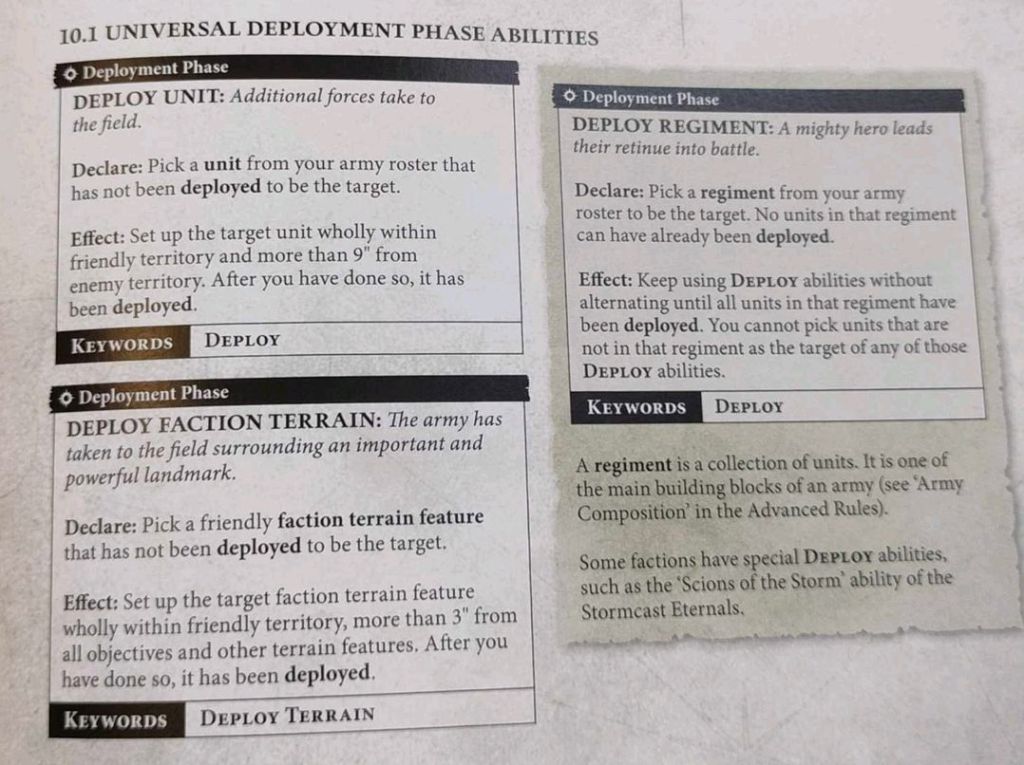
You can choose to drop individual units instead of the Battalion as a whole, but note that once you start breaking it up, you’re committed to drip them out one by one. You can’t just drop the whole of the remainder of the Regiment once you start doing it this way.
One way to profit from this rule would be when you outdrop your opponent by a long distance: if you can split up one of your regiments and still beat their minimum drops, you can gain more knowledge from their deployment before you show your own hand. So it will pay to keep an eye on the daylight between your drops and your opponent’s if they have a lot of regiments and / or Auxiliaries, and consider splitting up one of your regiments if it keeps you under their drops in total.
You CAN Walk On Objectives
Yes, you can walk and stand on objectives. This has been a burning question throughout the slow drip-feed marketing of 4th Edition, since in the early days of competitive 10th Edition 40k you could not walk onto the objectives at all. This led to some WEIRD interactions between big base models and small base models and charges. The long and short of it is, the AOS designers had the presence of mind to ignore that particular problem.
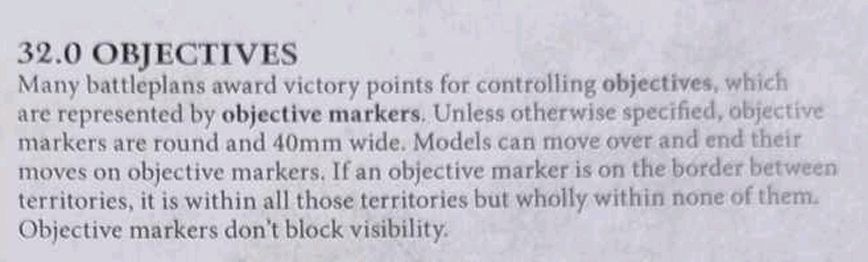
Oh, and if you’re curious, the new “objective circles” are 7.57″ now for you math nerds out there doing geometry in a game about plastic dudes murdering each other.

Returning Slain Models and Replacing Units Are Slightly Different
In 4th edition, when you return a model to a unit you have return it:
- In coherency with the unit, and;
- In coherency with models that weren’t returned or added to that unit that turn.
No more within an inch, no cap on wounds–err health returned, nothing.
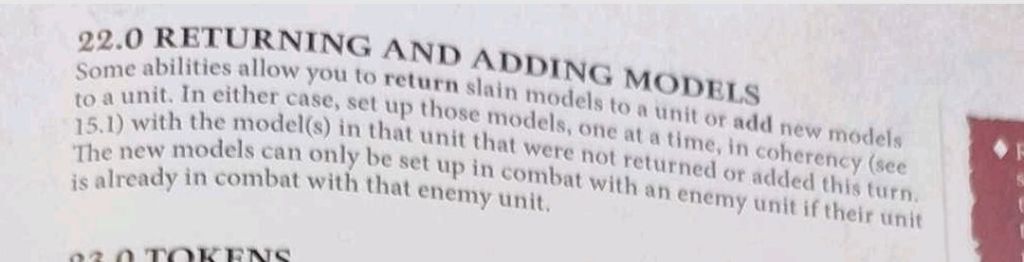
Just worth emphasizing here that it’s not quite the free-for-all that some people have taken it for on an initial reading. We’ve noticed a few people missing the second clause – that the returned models need to be coherent with models that were already remaining in the unit, not just their fellow newly-returned models. There’s a chance people will try to chain out their returned models, but that’s not actually allowed here.
As for replacement units, remember that they cannot be replaced themselves, so it is a one time deal when they come back–that’s also how it was in 3rd edition. The real sauce though is when you return a slain unit to the battle, it comes back at half-strength if it was a multi-model unit, and is treated as an entirely new unit… which means that any Once Per Battle abilities it was eligible before originally it’s now eligible for again, even if the original unit had previously used that ability.
Passive Effect Timing Changes Depending On Whose Turn It Is
Passive effects are any abilities with the PASSIVE tag that must be applied if the conditions for that effect are met. Units cannot be affected by the same Passive effect twice, so no stacking up. What gets weird about them is the timing in which they are applied.
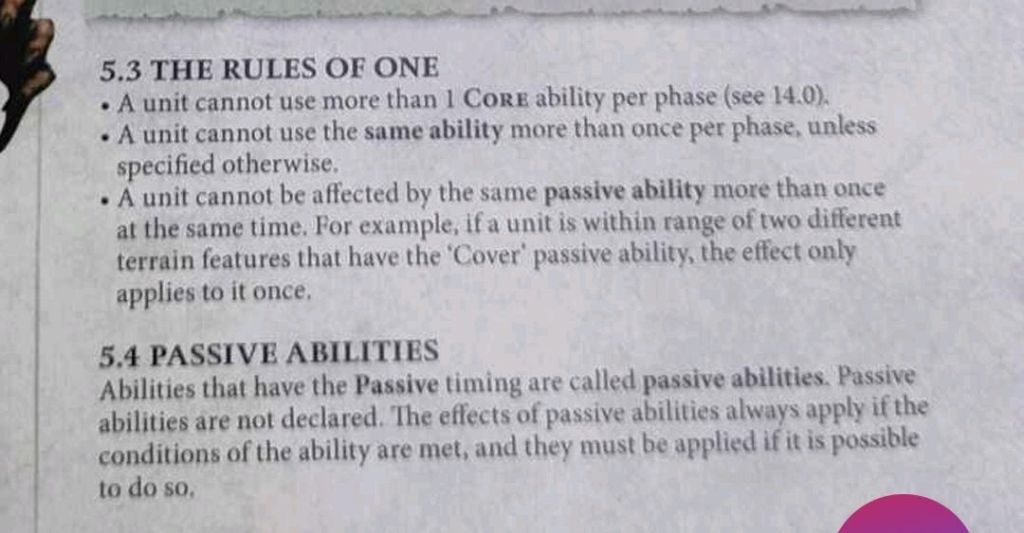
First, the Core Rules states that the most recently applied Passive effect is the one that trumps all other abilities that could affect that unit. Meaning that if an enemy unit your Liberators are in combat with had a passive ability that says, “Enemy Units in Combat range of this unit ignore positive modifiers to their save rolls.”, then issuing All-Out-Defence to that unit would do nothing. That’s basically how it has always worked.
However, GW has defined the following to be the Order of Effects for applying passive effects:
Neutral Passives -> Opposing Player -> Active Player (Whose Turn It Is)
Left to Right, Right being the highest precedence
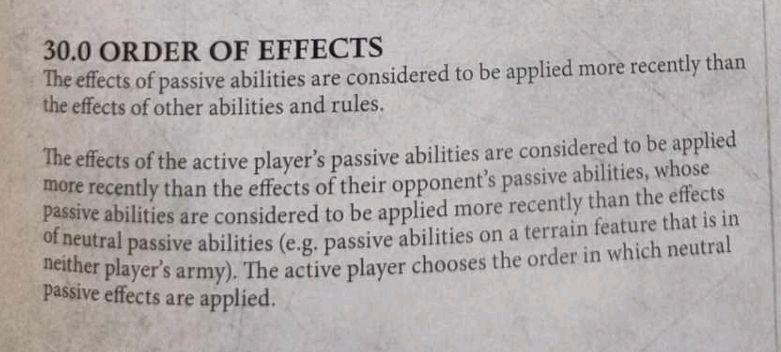
For the most part, this won’t create many major issues, but there are going to be weird scenarios come up where the result of multiple passives interact with each other, namely around how modifiers are applied to characteristics.
Essentially, the Order of Operations for modifying rolls/characteristics is:
Set -> Multiply -> Divide -> Add -> Subtract
The Core Rules go on to specify that if you have multiple abilities trying to set, multiply, divide, etc a characteristic or a roll, you apply them in the order of effect, with the most recently applied effect taking precedence. Let’s imagine that you have a Hero that sets the damage characteristic of attacks targeting that unit to 1. Then, let’s imagine your opponent has a unit that sets the damage characteristic of attacks targeting enemy heroes to 5. Lastly, there are no neutral passives setting damage to anything, and that both of these units are in combat with each other.
If you are the active player and that enemy unit attacks your hero and you fail one save:
Neutral (Nothing) -> Opposing Player (Damage set to 5) -> Active Player (Damage Set to 1)
Solution: Your hero takes 1 damage.
If it is your opponent’s turn, then they are the active player and the same situation plays out like this:
Neutral (Nothing) -> Opposing Player (Damage set to 1) -> Active Player (Damage Set to 5)
Solution: Your hero takes 5 damage.

Once Per Phase/Turn/Battle Is Weird
Ok, this is going to be a bit complex, and I’m going to do my best to articulate the conversation around this, because this is by far the most poorly-written interaction in an otherwise really well-written set of Core Rules.
Essentially, for the entirety of the drip feed of 4th, we’ve seen abilities that say “Once Per Battle” and then some that say, “Once Per Battle (Army)” with zero detail on what the hell the difference is between those. Now that we’ve seen the core rules…well, the core rules don’t do a good job of explaining the difference either.
What you need to know to make sense of the difference between a “Once per…” and “Once per… (Army)” ability is who uses the ability. The key to unlocking this question is in a sidebar on the page describing the timing on “Once Per…” abilities and how often they can be used. It’s not well explained, but the underlying principle is that abilities that do not specify WHO uses the ability means the PLAYER is using the ability, even if you are targeting a unit with that ability.
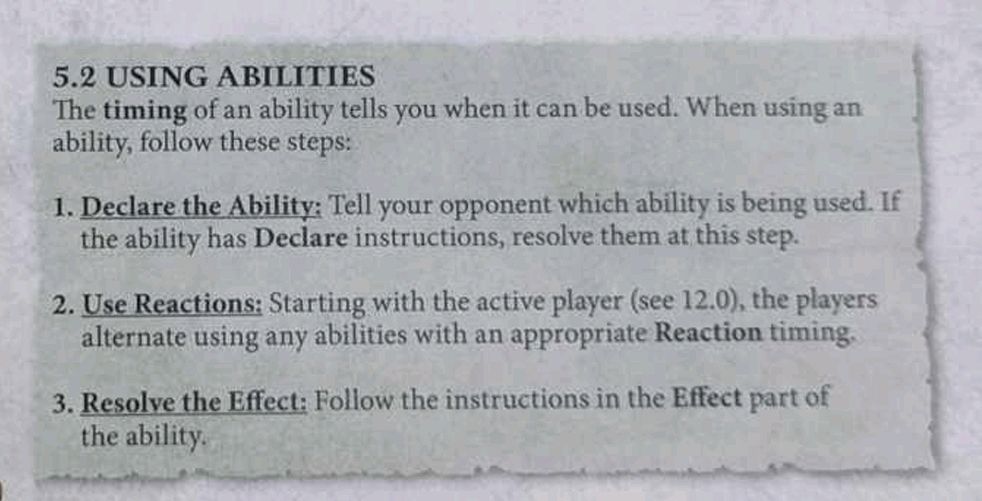
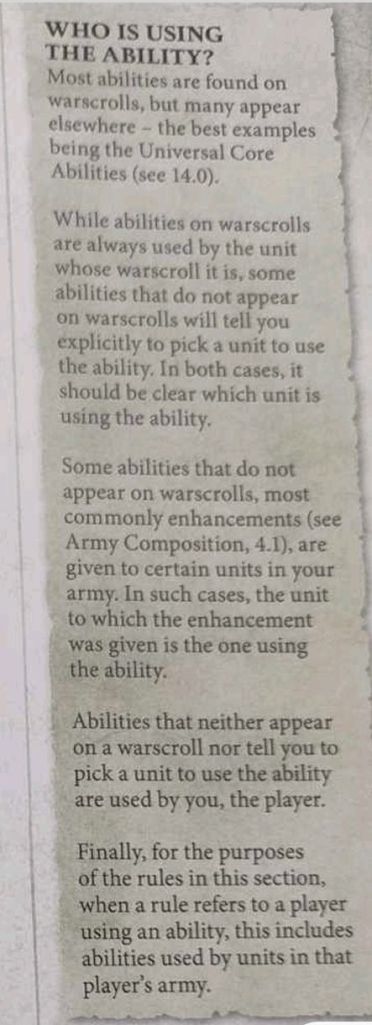
The shorthand is this:
- First, Once Per abilities that have (Army) in their descriptor can be used once. Period. Got 20 Auric Runefathers? Well, only one of them gets to use the Warrior-Kings ability. Ever.

- Second, if the Declare step of an ability does not say that a UNIT uses the ability, then the PLAYER is using the ability, and thus are restricted to the one time according to the ability’s timing restriction, be it once per turn, or once per battle.
- This means that even though the Ironjawz Waaagh, for example, has you pick an IJ Hero to be the TARGET, because the ability doesn’t say the Hero uses it, then the Player is the one using it.
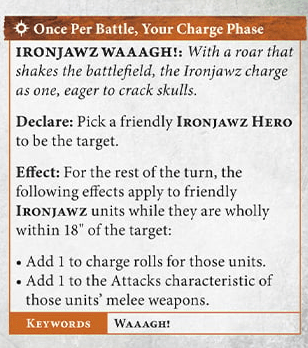
We’ve seen this one tripping a few people up because it tells you to pick a Hero, but the key thing to note is that you’re picking them as the target – it’s not telling you to pick them to use it.
- Third, if the Declare step of an ability specifies that a UNIT is using the ability, then all eligible units for that ability can use it within that timing restriction (once per turn, once per battle etc).
- So for Daughters of Khaine, that means you can keep issuing the All-Out Slaughter command any number of times that you are eligible to do so even though it says Once Per Battle, as long as you have eligible units to receive that command–but once a given unit uses it, that unit can’t use it again.
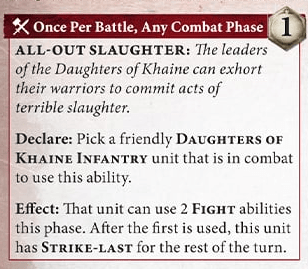
To summarize:
If the ability says (Army) or if the DECLARE step does not say that a unit uses the ability = Maximum One Time in that timing restriction.
In all other cases, each eligible unit can use that ability within that ability’s timing restriction.

So we hope that helps! We’ve seen a lot of debate and discussion about that last point in particular over the weekend – including some very experienced players, so if you got it first time, that’s great; but if you needed to talk it through, then you’re in good company.
We’ll be punching out the 4th Ed articles over the coming days and weeks, so make sure to check back in and keep an eye on what’s going on.
Have a good week, nerds.

If you’d like to help us continue our work, we’d love to have your support. All Patreon Tiers include Discord access, exclusive articles and regular contests. Our Tiers are priced to be within everyone’s reach, so please click here to join us today!




 Plastic Craic
how does this work with companion abilities?
LikeLike